

Rising Resilient Counseling
West Linn, OR
room for you
to grow.
Specializing in individual, couple, and family therapy for teens, young adults, and 30-somethings navigating trauma, neurodivergence, and relationship conflict.
Whatever brings you here, there's a place for it.

I’ll be the first to tell you:
It's not all in your head.
(Well — it is. But not like that.)
Maybe you're here because your kid is struggling—big feelings that spill over, meltdowns out of nowhere, school getting harder, anxiety taking over.
You're constantly wondering if you're doing the right thing, if you're missing something important, if there's a way to help you just haven't found yet.
Or maybe you're here for yourself. You're the one who keeps it together—at least on the outside. But something's been cracking open. The self-doubt, the reactivity, the exhaustion, the amount of effort it takes to get through ordinary days. You've tried the standard advice. Done the things that are "supposed" to help. Still struggling.
What therapy feels like here:
Real, not performed
Direct, not harsh
Deep, without needing to fall apart to get there
Funny when it counts, serious when it matters
focused on real change

Feeling a little more like yourself
(or at least less overwhelmed)
is worth showing up for.
Life doesn’t magically calm down. Kids still melt down. Parents still second-guess themselves. Your brain still spirals at 2am. People still disappoint you (sometimes including you). Therapy isn’t about fixing the outside—it’s about changing how alone you feel on the inside when things get hard.
What I see happen in therapy:
People start trusting what they know about themselves instead of overriding it with what they should feel or want. Teens and adults figure out what's actually theirs to carry—and what never was. Parents shift from "Why am I doing this wrong?" to "Okay, I see what's happening here." Families interrupt patterns that have been quietly running the show for years.
And after a while, people build enough steadiness that therapy becomes a resource instead of a lifeline. (I am trying to work myself out of a job, after all.)

Nothing ever goes away until it has taught us what we need to know.
— Chödrön

Who I Work With
Kids & Teens
Big emotions, shutdowns, meltdowns—it's not defiance, it's communication. I help kids and teens understand what's underneath the behavior and find ways to ask for what they need that people can actually hear. This isn't therapy where I force feelings or ask "how does that make you feel?" every five minutes. It's about figuring out how their brain works, what's hard and what's hard about it, and what might make things feel more manageable.
Neurodivergence
You've been dealing with anxiety, depression, or chronic overwhelm for years—and something still feels off. Maybe you've always known your brain works differently, or maybe you're just starting to suspect there's something underneath the symptoms that no one's caught yet. I work with clients whose neurodivergence has been missed or misdiagnosed, especially when it shows up as anxiety and depression instead of “classic” ADHD or autism. We'll figure out what's actually happening and build strategies that work with your brain instead of against it.
Parents & Families
Parenting a neurodivergent kid when you're neurodivergent yourself can feel like running two different operating systems on the same device. Or parenting a neurodivergent kid when you're not can feel like speaking different languages without a translator. I help families understand each other's wiring, lower the reactivity, and build connection that actually works for everyone involved. Not teen vs. parents—understanding how everything fits together.
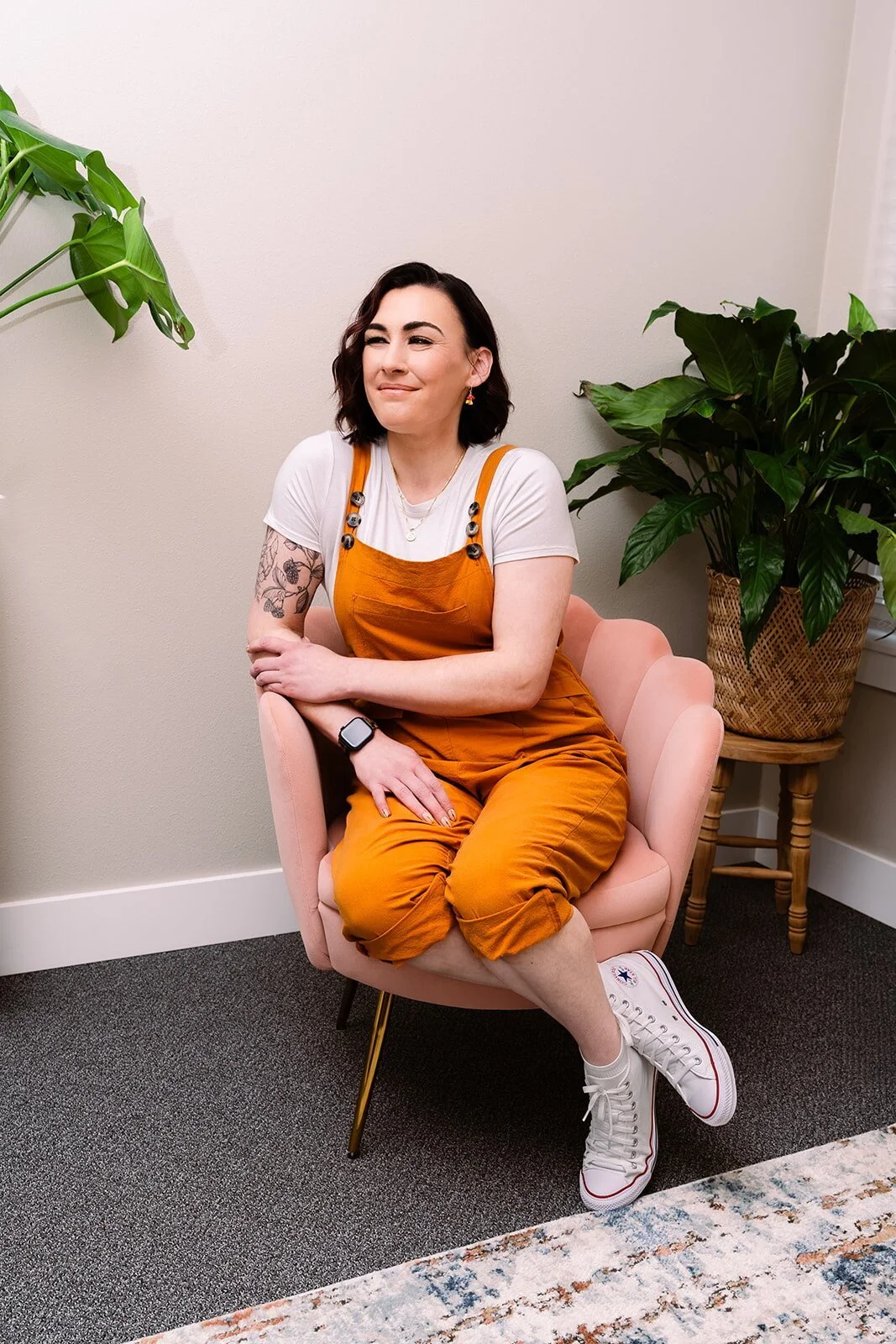
lindsey Regier, LPC.
Support That Sees the Story Beneath the Struggle.
If you’re here, you’ve probably tried everything people said “should” work — and it didn’t. That’s usually a sign your brain (or your kid’s brain) isn’t the problem; the approach is.
My work is about decoding the story behind the struggles, supporting your child in a way that fits their wiring, and helping you feel confident instead of overwhelmed. No judgment, just practical tools and real support.
ready to get started?
Fill out a new client inquiry form.
I’ll reach out with next steps and make sure we’re a good fit.
We meet, and build a plan that feels supportive — not overwhelming.
“
“The most interesting people you’ll find are ones that don’t fit into your average cardboard box. They’ll make what they need. They’ll make their own boxes.”
-Dr. Temple Grandin
faqs
-
You’re still in the right place. Labels can be helpful, but they aren’t required. Therapy isn’t about sorting you into a category — it’s about understanding how your brain works and what helps you feel more like you.
-
Such a fair question - therapists are always talking about “a good fit,” but what does that even mean?
Here’s the deal: research has shown that the biggest driver of outcomes in therapy is the therapeutic relationship, even more than modalities or other factors. Being “a good fit” isn’t about me sizing you up, it’s about you interviewing me for the job of “your therapist.”
For me, being “a good fit” isn’t about complexity or “how big the problem is,” it’s making sure that my expertise and particular skillset would actually be helpful. Fit is about alignment: your needs, my scope of practice, and whether my approach is the right one for the job.
-
I’m in-network with a number of insurance plans, and can also bill out of network. For current rates, accepted insurance plans, and more information about out of network billing, click here.
-
Totally normal. Most kids and teens aren’t exactly lining up to spill their guts to a stranger. I start by focusing on trust — getting to know them, finding what helps them feel safe, and letting them set the pace. Therapy works best when they feel like they have a say in it.